Komsomolskaya Pravda Newspaper

Newspaper Komsomolskaya Pravda
May 20, 2026, 16:50
Oksana FOMINA
Exhibition of Russian Art Opens in Paris for the First Time in Four Years
Visitors Will See Masterpieces from the Collection of Serbian Collector Vladimir Pesic
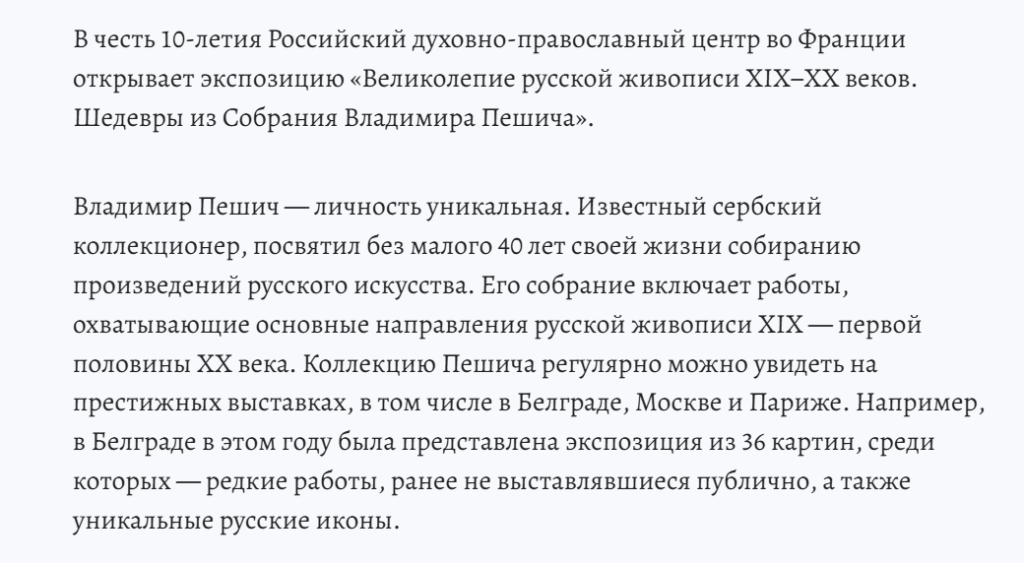
To mark its 10th anniversary, the Russian Orthodox Spiritual and Cultural Center in France is opening the exhibition “The Splendor of Russian Painting of the 19th–20th Centuries. Masterpieces from the Collection of Vladimir Pesic”.
Vladimir Pesic is a truly unique figure. The renowned Serbian collector has devoted nearly 40 years of his life to collecting works of Russian art. His collection includes works representing the principal movements of Russian painting of the 19th century and the first half of the 20th century. Pesic’s collection is regularly featured at prestigious exhibitions, including those in Belgrade, Moscow, and Paris. For example, an exhibition of 36 paintings was presented in Belgrade this year, including rare works that had never before been publicly displayed, as well as unique Russian icons.
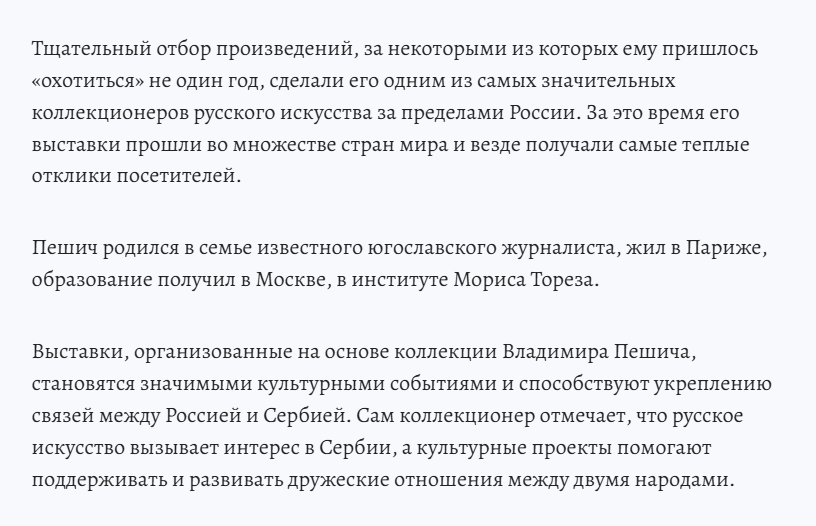
There are no accidental acquisitions in Pesic’s collection. Vladimir speaks about the artists whose works he owns with such warmth and affection that one might think they are his closest friends.
The careful selection of artworks, some of which he spent years “hunting” for, has made him one of the most significant collectors of Russian art outside Russia. Over the years, his exhibitions have been held in numerous countries around the world and have everywhere received the warmest responses from visitors.
Pesic was born into the family of a well-known Yugoslav journalist, lived in Paris, and received his education in Moscow at the Maurice Thorez Institute.
Exhibitions organized on the basis of Vladimir Pesic’s collection have become important cultural events and contribute to strengthening ties between Russia and Serbia. The collector himself notes that Russian art generates considerable interest in Serbia and that cultural projects help maintain and develop friendly relations between the two nations.
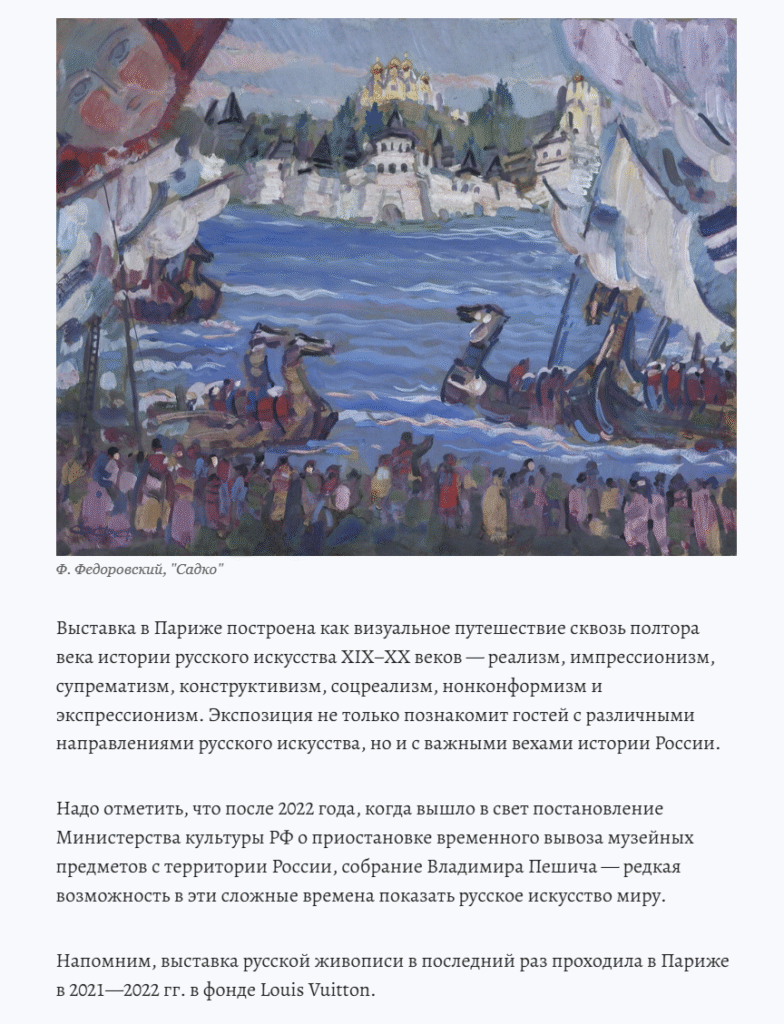
The exhibition in Paris is conceived as a visual journey through one and a half centuries of Russian art history, spanning the 19th and 20th centuries—from Realism, Impressionism, Suprematism, and Constructivism to Socialist Realism, Nonconformism, and Expressionism. The exhibition not only introduces visitors to various movements in Russian art but also acquaints them with important milestones in Russia’s history.
It should be noted that after 2022, when the Russian Ministry of Culture issued a decree suspending the temporary export of museum objects from the territory of Russia, Vladimir Pesic’s collection became a rare opportunity to present Russian art to the world during these challenging times.
It is worth recalling that the last exhibition of Russian painting in Paris took place in 2021–2022 at the Louis Vuitton Foundation.
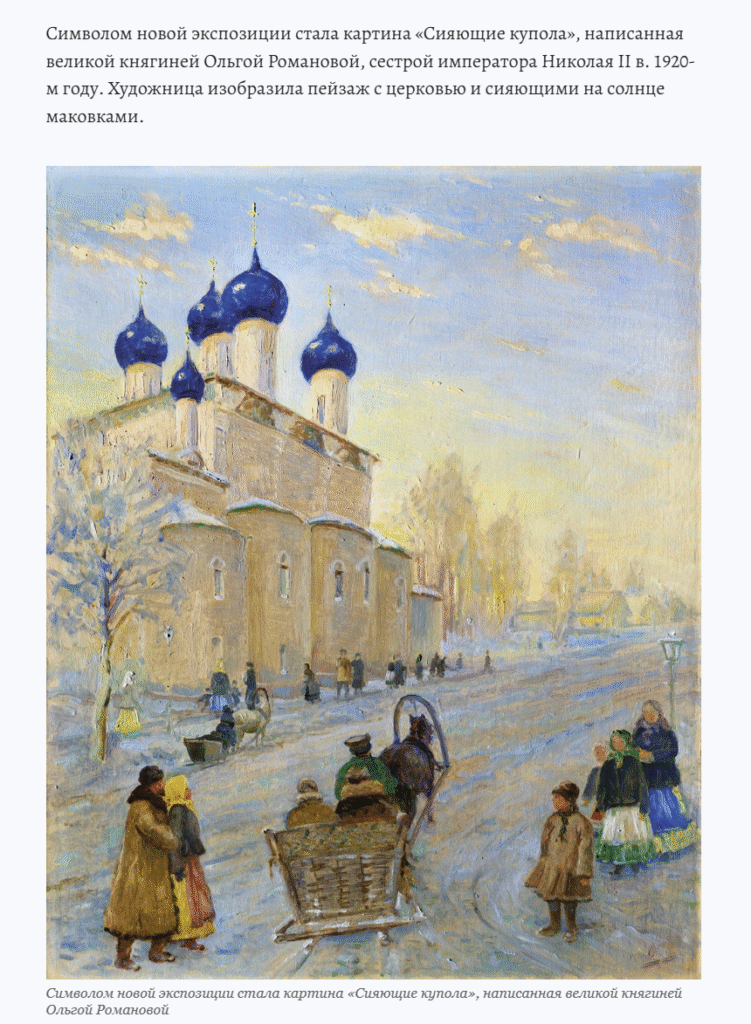
The symbol of the new exhibition is the painting “Shining Domes,” created in 1920 by Grand Duchess Olga Romanova, sister of Emperor Nicholas II. The artist depicted a landscape featuring a church and domes gleaming in the sunlight.
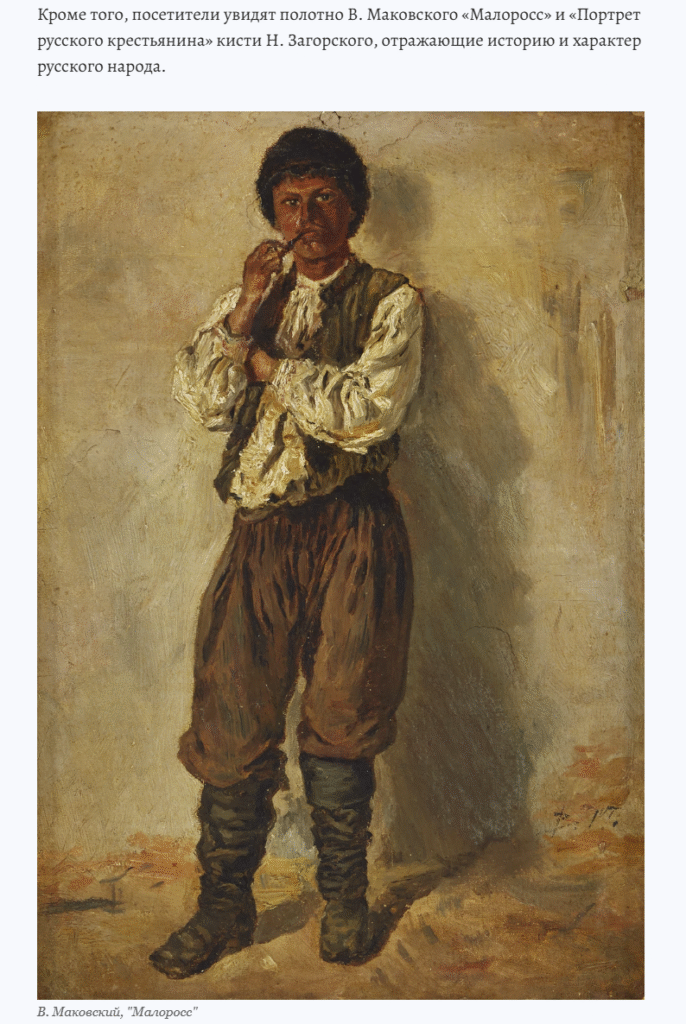
In addition, visitors will see V. Makovsky’s “Little Russian” and N. Zagorsky’s “Portrait of a Russian Peasant,” works that reflect the history and character of the Russian people.
Visitors will undoubtedly appreciate the opportunity to see in person “The Struggle of Ideologies” by V. Tatlin, the founder of Constructivism. Created during the 1910s and 1920s, the work vividly demonstrates the synthesis of Cubo-Futurism with the artist’s Constructivist explorations. Alongside Constructivism, Russia was also the birthplace of another avant-garde movement—Suprematism, founded by Kazimir Malevich. In Pesic’s collection, Suprematism is represented by “Suprematist Composition” by one of Malevich’s most talented students, S. Senkin.
Incidentally, admission to the exhibition “The Splendor of Russian Painting of the 19th–20th Centuries. Masterpieces from the Collection of Vladimir Pesic” is free of charge upon prior registration. The exhibition will remain open to visitors until June 30.